Rated EXCELLENT on Trustpilot
No Hidden Costs
Trading Standards Approved
Specified correctly. Installed professionally. Built to last.
Give us a call today


A resin-impregnated liner is installed inside the existing pipe and cured in place, forming a new structural layer within the host pipe.
When properly specified, this creates:
Give us a call today
It is often ideal where:
However, relining is not suitable for every situation.
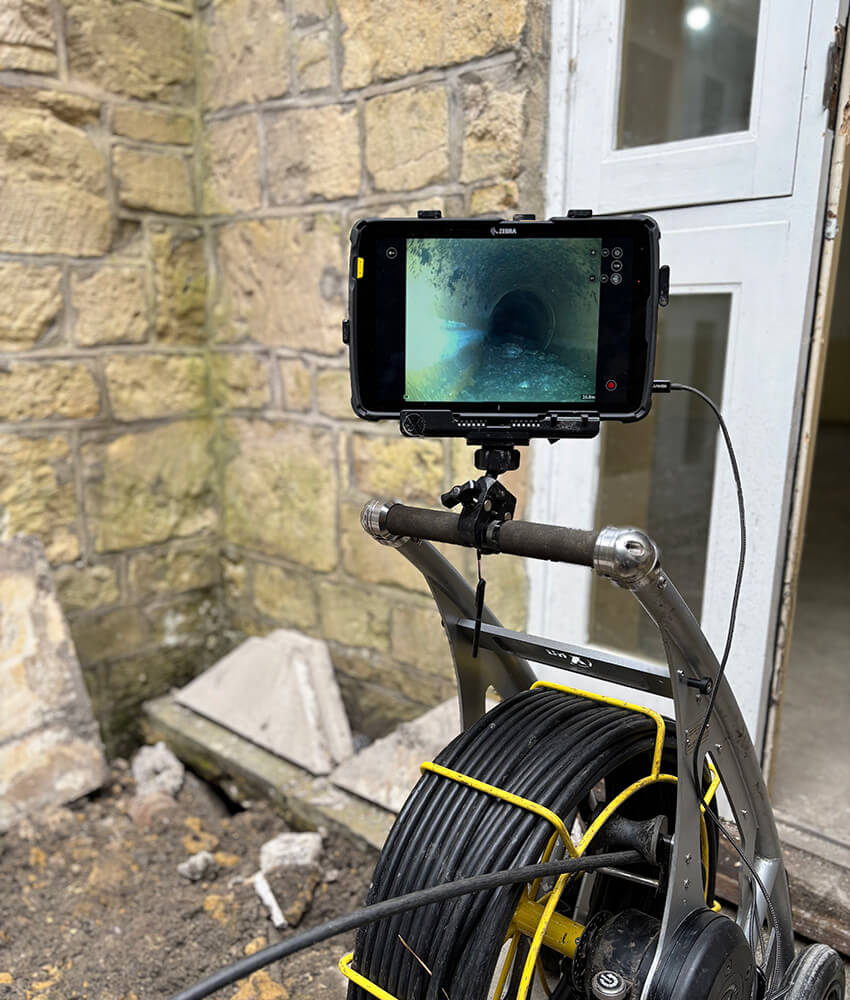
Every project begins with a fully coded CCTV inspection to assess structural viability.
Patch Lining is used for isolated defects in the pipe, such as single fractures, localised joint failures and short damaged sections, reinforcing only the affected area.
Full length relining is recommended when multiple defects are present, long term structural rehabilitation is required, in pipes showing progressive deterioration and when a consistent internal structural layer is needed. Full length lining restores structural integrity along the entire run of the pipe.
The decision between the use of patch and full relining is based on:
We specify based on evidence — not preference.
High-definition inspection, coded to MSCC5 standards.
We determine viability, liner thickness requirements and long-term performance suitability.
You receive a written explanation of recommended repair method.
Carried out by experienced technicians using appropriate materials and curing processes.
Final inspection to confirm structural integrity and completion.
Clear process. Clear accountability.
Relining installed without correct assessment can fail for a number of reasons:
Structural relining requires judgement and experience.
We combine:
That combination protects the integrity of the repair.
Relining often allows commercial premises to remain operational with minimal disruption while work is carried out.
It is frequently the most intelligent long-term solution — where structurally appropriate.
We are not occasional relining installers. We are survey-led structural specialists.
No guesswork. No subcontractors. Highly experienced and professional.
Simple summary with detailed findings you can actually understand.
We don’t just show the issue — we fix it, too.
Give us a call today
We also operate across Bath and the wider South West through Roman Rod Ltd.
When installed without proper preparation or structural assessment, it can be!
When specified correctly — following a fully coded CCTV inspection — relining becomes a structural rehabilitation method.
The difference lies in investigation and judgement.
Installing a liner is one thing.
Specifying the correct solution is another.
Relining requires:
Without these steps, performance is compromised.
Not every pipe is suitable.
Severely collapsed or structurally unstable sections may require excavation instead.
We assess structural viability before recommending lining.
If it isn’t appropriate, we say so.
When correctly specified, liner thickness is proportionate to pipe diameter.
Proper installation does not compromise flow performance.
Incorrect specification can.
Again — judgement matters.
Excavation has its place.
However, in many cases — especially beneath driveways, landscaped areas, listed properties or commercial floors — structural relining is the more intelligent solution.
It restores integrity with minimal disruption and downtime.
Drain relining is a specialist discipline.
When approached with evidence, standards and experience, it provides long-term structural stability.
When approached casually, it becomes a risk.
Roman Rod Cotswolds approaches it properly.
3 easy ways to get in touch with us.